

品牌分类
品牌咨询
联系方式
公司地址
苏州工业园区生物纳米园A4#216
联系电话
4000-520-616 / 18915418616
传真号码
0512-67156496
电子邮箱
info@ebiomall.com
公司网址
https://www.ebiomall.com


商品描述
Related Products
- ABT-263 (Navitoclax)
- Q-VD-OPh hydrate
- MIM1
- ABT-199
- UMI-77
Molarity CalculatorDilution Calculator
| DiscoveryProbe™ Apoptosis-related Compounds Panel |

Sample solution is provided at 25 µL, 10mM.
 Click and Customize the Panelwith your own choices of compounds/size/quantities/chemical forms etc.
 Nature.2017 Jan 19;541(7637):417-420.
 Nature.2018 Nov;563(7731):407-411.
 Nature.2018 Jun 13.
 Nature.2018 Jun 27.
 Nature.2018 Mar 29;555(7698):673-677.
 Nature.2017 Sep 7;549(7670):96-100.
 Nature.2016 Apr 21;532(7599):398-401.
 Science.2016 Aug 5;353(6299)594-8
 Nat Nanotechnol.2017 Dec;12(12):1190-1198.
 Nature Biotechnology.2017 Jun;35(6):569-576
 Nat Med.2018 Sep 17.
 Cell.2018 Dec 21. pii: S0092-8674(18)31561-7.
 Cell.Available online 25 October 2018.
 Cell.2018 Sep 27. pii: S0092-8674(18)31183-8.
 Cell.2018 Jun 28;174(1):172-186.e21.
 Cell.2018 Feb 22;172(5):1007-1021.e17.
 Cell.2017 Nov 30;171(6):1284-1300.e21.
 Cell.2017 Aug 17. pii: S0092-8674(17)30869-3.
 Cell.2017 Jul 13;170(2):312-323
 Nat Med.2018 Jan 29.
 Nat Med.2017 Nov;23(11):1342-1351.
 Cell.2017 Apr 6;169(2):286-300.
 Cell.2015 Aug 27;162(5):987-1002.
 Cell.2015 Feb 12;160(4):729-44.
 Nature Medicine.2017 Apr;23(4):493-500.
 Cancer Cell.2018 May 14;33(5):905-921.e5.
 Cancer Cell.2018 Apr 9;33(4):752-769.e8.
 Cancer Cell.2018 Mar 12;33(3):401-416.e8.
 Cancer Cell.2017 Aug 14;32(2):253-267.e5.
 Nat Methods.2018 Jul;15(7):523-526.
 Cell Stem Cell.2018 May 3;22(5):769-778.e4.
 Cell Stem Cell.2017 Nov 20. pii: S1934-5909(17)30375-2.
| Catalog No. | Product Name | Summary | Targets | CAS Number | Smiles | |
| A3007 | ABT-263 (Navitoclax) | Potent Bcl-2 family inhibitor, inhibits Bcl-2, Bcl-xL, and Bcl-w | Apoptosis|Bcl-2 Family | 923564-51-6 | CC1(CCC(=C(C1)CN2CCN(CC2)C3=CC=C(C=C3)C(=O)NS(=O)(=O)C4=CC(=C(C=C4)NC(CCN5CCOCC5)CSC6=CC=CC=C6)S(=O)(=O)C(F)(F)F)C7=CC=C(C=C7)Cl)C | |
| A4465 | MIM1 | Mcl-1 Inhibitor | Apoptosis|Bcl-2 Family | OC1=CC=C(/C=N/N2C(C)=CS/C2=NC3CCCCC3)C(O)=C1O | ||
| A8194 | ABT-199 | Bcl-2 inhibitor,potent and selective | Apoptosis|Bcl-2 Family | 1257044-40-8 | CC1(CCC(=C(C1)C2=CC=C(C=C2)Cl)CN3CCN(CC3)C4=CC(=C(C=C4)C(=O)NS(=O)(=O)C5=CC(=C(C=C5)NCC6CCOCC6)[N+](=O)[O-])OC7=CN=C8C(=C7)C=CN8)C | |
| B4881 | UMI-77 | Mcl-1 inhibitor | Apoptosis|Bcl-2 Family | 518303-20-3 | C1=CC=C2C(=C1)C(=CC(=C2O)SCC(=O)O)NS(=O)(=O)C3=CC=C(C=C3)Br | |
| A1901 | Q-VD-OPh hydrate | Cell-permeable, irreversible pan-caspase inhibitor | Apoptosis|Caspase | 1135695-98-5 | CC(C)C(C(=O)NC(CC(=O)O)C(=O)COC1=C(C=CC=C1F)F)NC(=O)C2=NC3=CC=CC=C3C=C2 | |
| A1902 | Z-VAD-FMK | Cell-permeable, irreversible pan-caspase inhibitor | Apoptosis|Caspase | 187389-52-2 | CC(C)C(C(=O)NC(C)C(=O)NC(CC(=O)OC)C(=O)CF)NC(=O)OCC1=CC=CC=C1 | |
| Download the Apoptosis related Compounds Panel - XLSXDownload the Apoptosis related Compounds Panel - SDF | ||||||
Related Biological Data
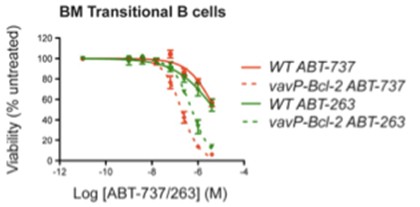
ABT-737, or ABT-263 at the indicated doses for 24 hours. Survival data are shown for transitional B cells (n = 3 mice for each genotype) and are the results of 3 independent experiments, each performed in triplicate. Experiments depicted in panels C and D were performed concurrently. Values represent mean ± SEM.
Related Biological Data
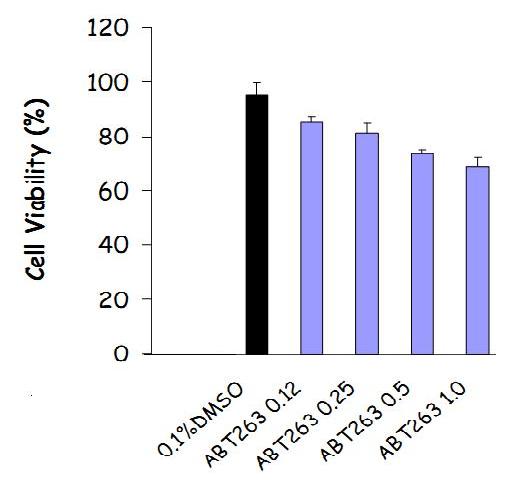
As an inhibitor of Bcl-2, ABT263 is effective to reduce cell viability in HG3-CLL cells. Incubating the cells with ABT263 in 96 well plates (3×10⁴ cells per well) for 24h shows a dose-dependent inhibition of cell viability with EC50 value of 2μM.[Source: Istituto di Scienze dell’Alimentazione]
Related Biological Data
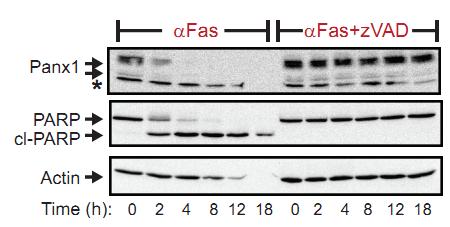
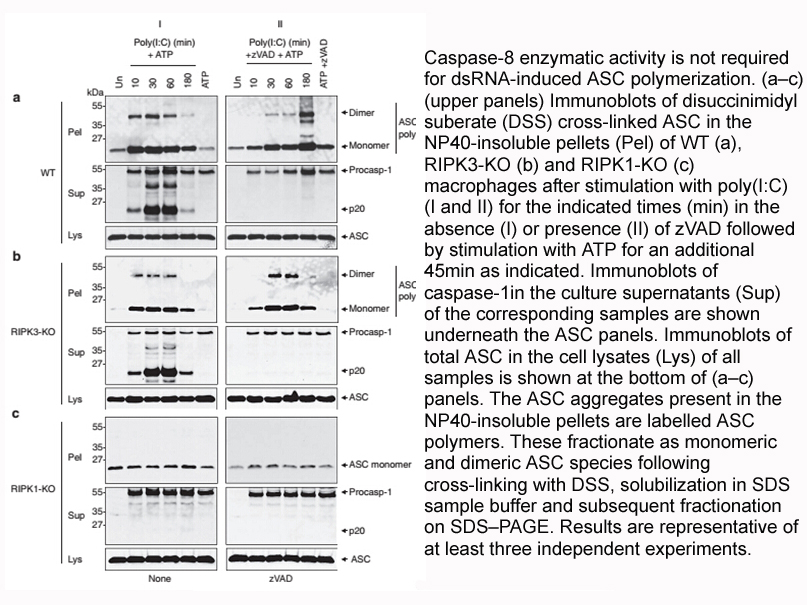
zVAD was able to completely suppress the proteolytic processing of Panx1 at each incubation time point in the anti-Fas treated Jurkat cells [1].
1. Boyd-Tressler A, Penuela S, Laird D W, et al. Chemotherapeutic Drugs Induce ATP Release via Caspase-gated Pannexin-1 Channels and a Caspase/Pannexin-1-Independent Mechanism. Journal of Biological Chemistry, 2014: jbc. M114. 590240.
Related Biological Data
Related Biological Data
Related Biological Data


- Available in stock with overnight delivery and free shipping over $500
- Cost-effective and competitive price to save your findings
- Potent, selective and cell-permeable in inhibiting or activating target molecules
- Diverse in chemical structure and route of administration (oral/i.m/i.v injection etc.)
- Detailed files describing potency, selectivity and applications etc.
- Supported by published data from top peer-reviewed journals
- Guaranteed high quality with NMR and HPLC validation
| Solubility | Soluble in DMSO | Storage | Desiccate at -20°C |
| Packaging | 96 well plate | Form | Powder |
| General tips | For obtaining a higher solubility , please warm the tube at 37°C and shake it in the ultrasonic bath for a while.Stock solution can be stored below -20°C for several months. | ||
| Shipping Condition | Evaluation sample solution : ship with blue iceAll other available size:ship with RT , or blue ice upon request | ||
A wide range of well-characterized bioactive molecules that covers various targets related to apoptosis, including caspase, MDM2 and Bcl-2 etc. Facilitate your research towards the insights of cancer, degenerative diseases and autoimmunity etc. Applicable in cellular assays, animal models and drug screenings etc.
1. Fuchs Y, Steller H. Programmed cell death in animal development and disease.Cell. 2011 Nov 11;147(4):742-58. doi: 10.1016/j.cell.2011.10.033. Review. Erratumin: Cell. 2011 Dec 23;147(7):1640.Abstract Programmed Cell Death (PCD) plays a fundamental role in animal development and tissue homeostasis. We focus on the function and regulation of apoptotic proteins, including caspases, the key executioners of apoptosis, highlighting the functions of these proteins in cell differentiation and tissue remodeling. Finally, we explore the connections between apoptosis, stem cells and cancer, focusing on how apoptotic cells release a variety of signals to communicate with their cellular environment, including factors that promote cell division, tissue regeneration, and wound healing.
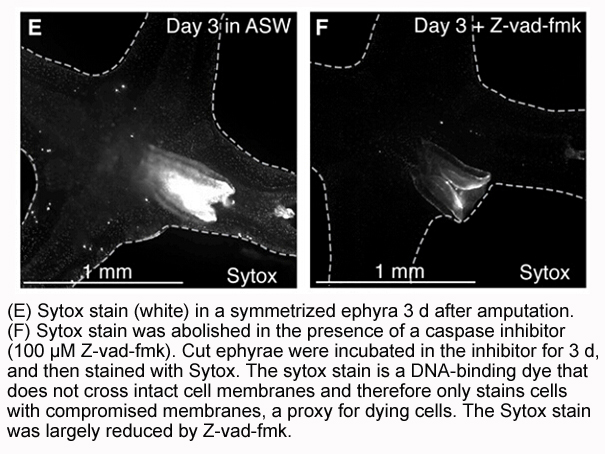
2. Abrams MJ, Basinger T, Yuan W, Guo CL, Goentoro L. Self-repairing symmetry in jellyfish through mechanically driven reorganization. Proc Natl Acad Sci U S A.2015 Jun 30;112(26):E3365-73.Abstract In this study, we report a previously unidentified strategy of self-repair, where moon jellyfish respond to injuries by reorganizing existing parts, and rebuilding essential body symmetry, without regenerating what is lost. we find that forces generated by the muscular network are essential for symmetrization. Furthermore, decreasing pulse frequency using muscle relaxants slowed symmetrization, whereas increasing pulse frequency by lowering the magnesium concentration in seawater accelerated symmetrization. Self-repair in Aurelia proceeds through the reorganization of existing parts, and is driven by forces generated by its own propulsion machinery.